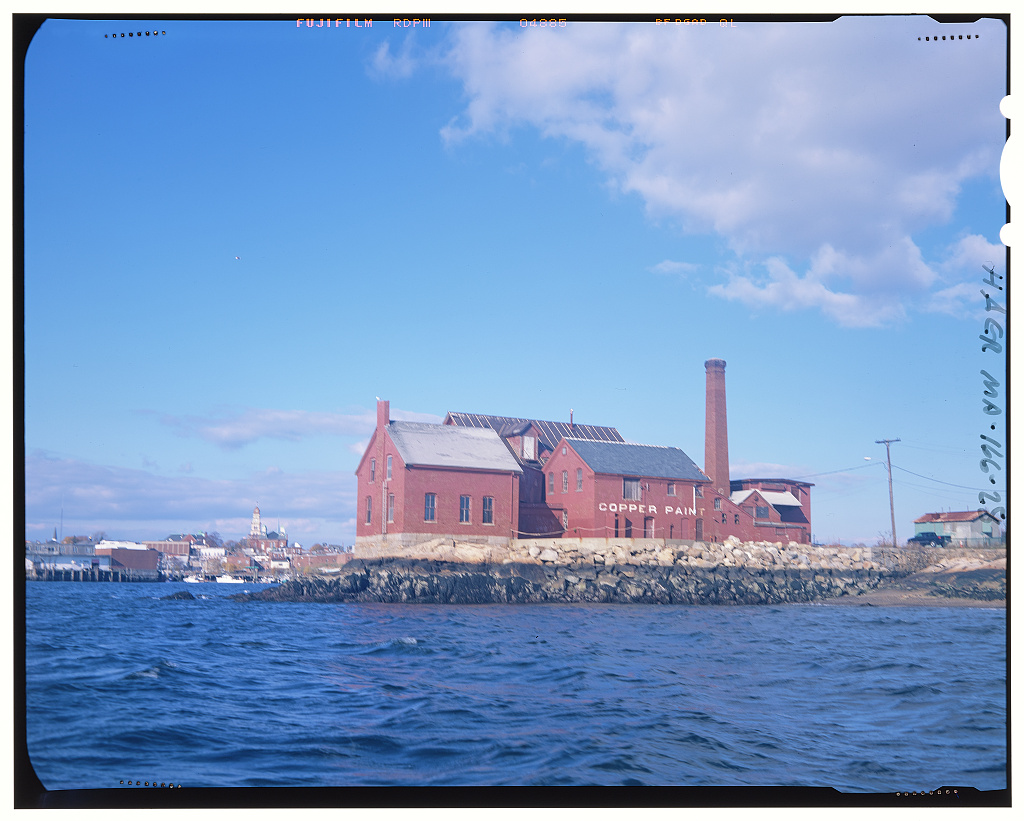
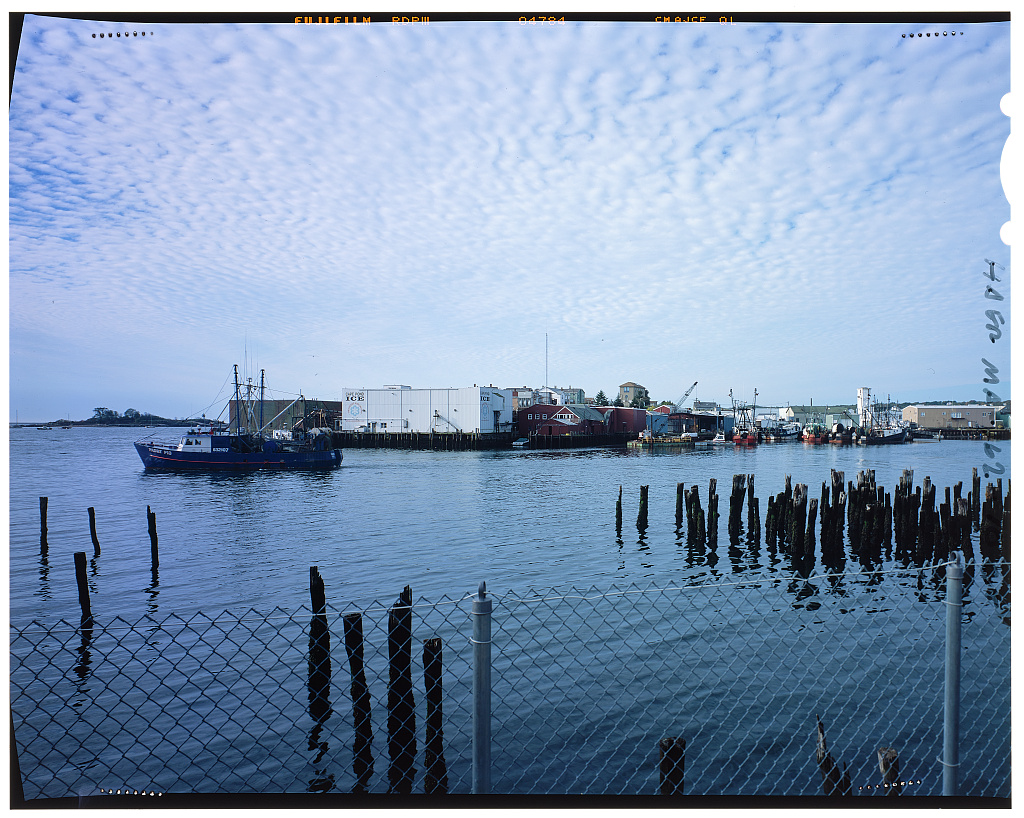
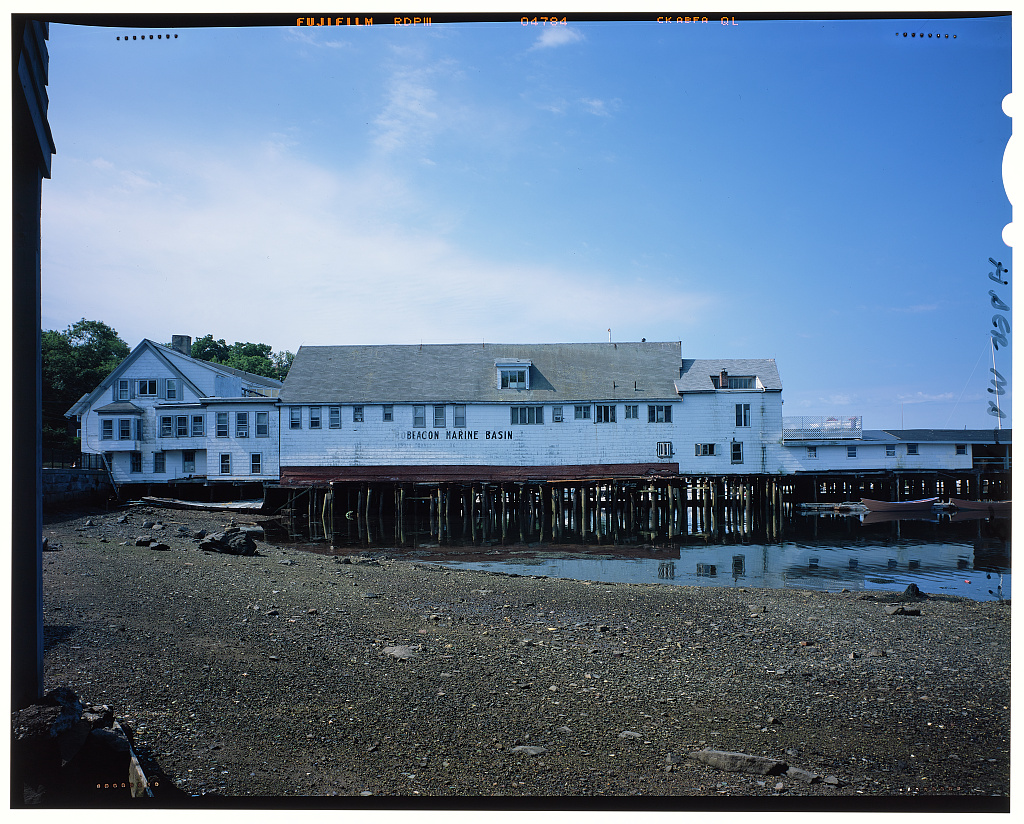
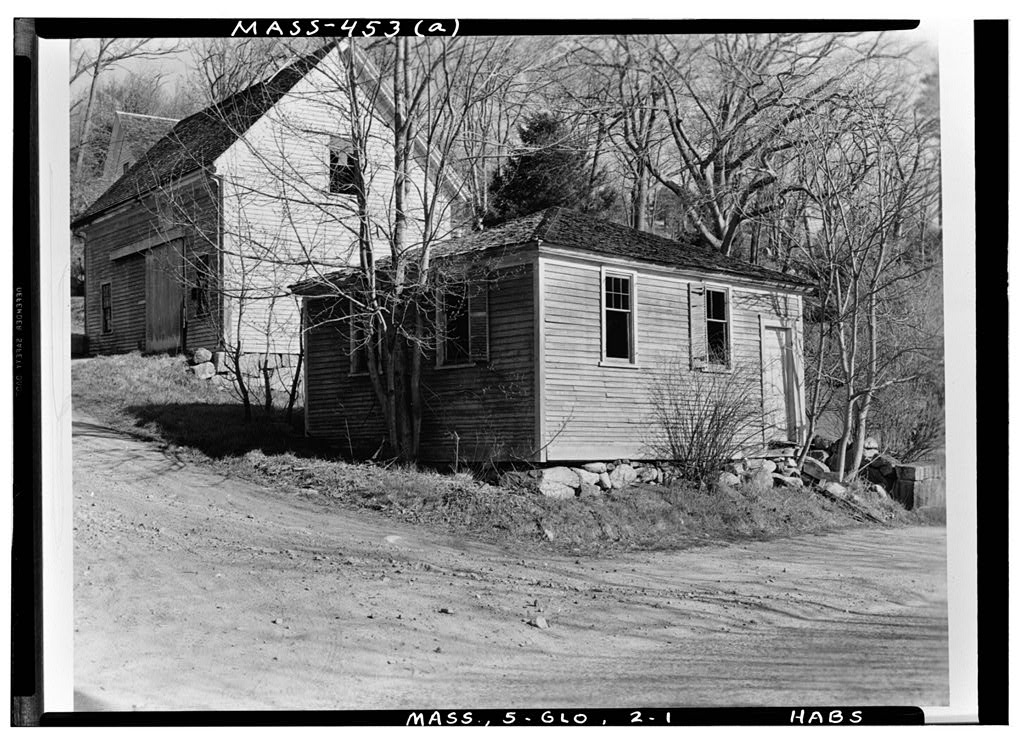
The Tarr and Wonson Paint Factory is significant as the first U.S. manufacturer of copper paint, which was used on the bottom of boats to prevent marine growth. In addition, the factory "is widely recognized in the area and by visitors as an important landmark and gateway to the inner harbor." Description: The factory sits at the end of the Rocky Neck peninsula and is made up of several masonry and wood structures that total square feet. The buildings include the Copper Mill, Boiler/Engine Room, Manufacturing Building, Warehouse Building, Office/Lab Building, and two outbuildings. The Copper Mill (ca. is a brick structure that sits on a granite foundation and has a slate roof. The brick Boiler/Engine Room (ca. also has a granite foundation. The wood frame Manufacturing Building (ca.
stands four stories tall and is clad in wood clapboard siding. The paint was mixed and prepared for shipment in this building. The ca. Warehouse Building is a timber structure that sits on wood piles and is connected to the Manufacturing Building by an overhead bridge. A belfry was added to the warehouse in the The brick Office/Lab Building, dating to ca. sits on a granite foundation and has corrugated steel roofing. Two concrete outbuildings were built ca. and and served as storage buildings for fuel oil and solvent. Other alterations included the conversion of the plant from coal to oil in the History: James G.
Tarr and Augustus Wonson established Tarr & Wonson, in and experimented with creating a paint that would protect the bottoms of wooden boats, ultimately settling on a mixture containing copper. The company's copper paint, as an advertisement stated, was "a perfect substitute for metal sheathing for one year, effectually protecting the bottom from boring of worms, and the adhesion of barnacles, grass, seaweed, moss, etc." Preventing marine growth reduced the travel times of boats, thereby resulting in a savings of time and money.
By the Tarr and Wonson paint "had been widely recognized as the most effective anti-fouling mixture on the market and was being shipped abroad as well as domestically.' 1 Congress Group Properties, Mann & Lovell Architects and Planners, "Tarr & Wonson Paint Factory Adaptive Reuse Study," submitted to The Architectural Conservation Trust (ACT) for Massachusetts, August p. 9. 2 "Tarr & Wonson Paint Factory Adaptive Reuse Study," pp. 3 Advertisement reproduced in "Tarr & Wonson Paint Factory Adaptive Reuse Study," p. 10. 4 "Tarr & Wonson Paint Factory Adaptive Reuse Study," p. 10. TARR AND WONSON PAINT FACTORY HAERNo.
MA-166 (Page 2) James Abbott purchased the company in and operated it until under the name "Gloucester Paints." Rule Industries then assumed ownership of the factory and continued manufacturing paint under the name Gloucester Paints until The factory stood vacant for a number of years, the subject of a preservation battle, but is now in the process of being preserved and adaptively reused by the Ocean Alliance.
 Block
Block