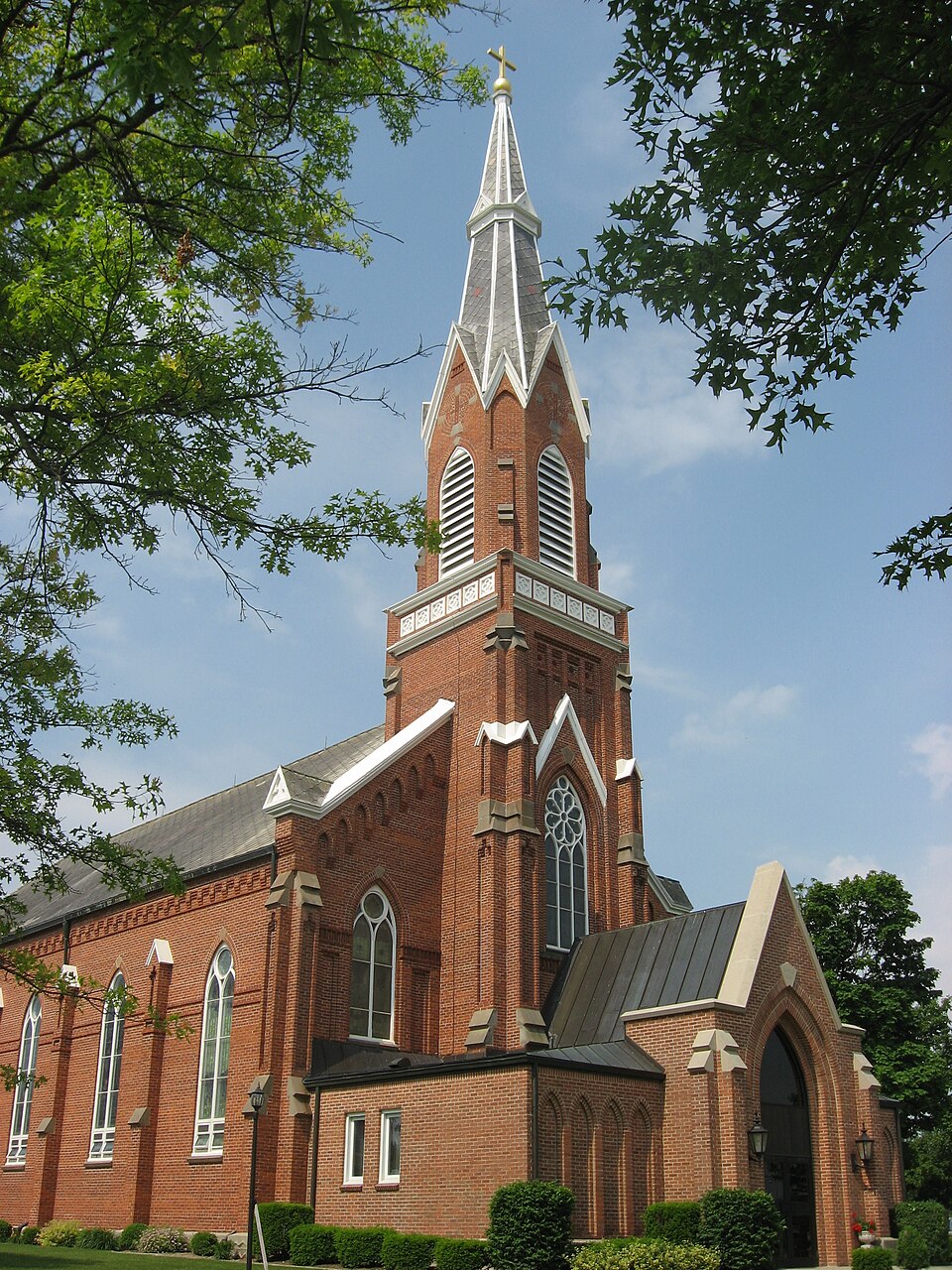
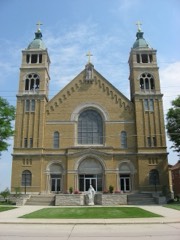
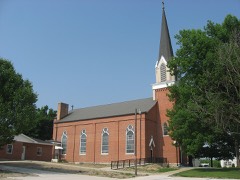
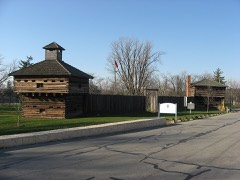
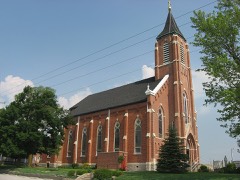
Listed on the National Register of Historic Places in
1979. A historic map-sheet match is not published yet. The record needs a coordinate-quality review before it can be joined to a sheet boundary.
From the record
“The southern and western part of Gibson township was largely settled by people from Southern Ohio and Pennsylvania, who originally came from Virginia and North and South Carollina, although a few came from Delaware. Denney, who came from Gallia County, Ohio ; the Clarks, who came from England ; Wateman Hastings and Solomon Collins, who came from the State of Delaware ; and Robert Hunter, James Alexander and David Hays who came from Fairfield County, Ohio - all of these settled in Gibson township about the same time.”
History of Mercer County, Ohio, and Representative Citizens (1907). Machine-read text.
one of 28 National Register listings in Mercer County · listed in 1979 · category: Building.
National Register reference number.79002827- the number the National Park Service assigned this property when it was listed, and the key its nomination file is catalogued under at the National Archives.
The southern and western part of Gibson township was largely settled by people from Southern Ohio and Pennsylvania, who originally came from Virginia and North and South Carollina, although a few came from Delaware. Among the early settlers in this section were the families of James -Cummins, Henry Denney, Benjamin Clark and William F. Denney, who came from Gallia County, Ohio ; the Clarks, who came from England ; Wateman Hastings and Solomon Collins, who came from the State of Delaware ; and Robert Hunter, James Alexander and David Hays who came from Fairfield County, Ohio - all of these settled in Gibson township about the same time. Nathan S. Scranton settled on a farm in Gibson township in 1849; the Scranton family, who were originally from the State of Connecticut, came to Mercer County from Medina County, Ohio. Near the town of Fort Recovery and north of the first neighborhood, Robert Travis, Edward Jones, Sylvester Schutt, Jacob Schaffer, Jacob Stuber and Joseph Clark and their families settled. In the eastern part of the township, around Sharpsburg, Aaron Rood and wife and' his sons, L. B. Rood and Alpha Rood, who were Yankees in every sense of the word; the Jones and Hall families and the families of Thomas Rockwell, Jacob and George Meyers and William Snyder - all of whom came from Butler County, Ohio - settled at an early date. In the same section of the township also settled John L. Fox, David Johnson, John Hedrick and Abraham Mott, Sr. - Abraham and James Z. Mott, sons of the lastnamed pioneer, still live in the township. The Lowry family came in at a later date and its representatives are still living in the township. Samuel Briner, Samuel Keller, David F. Blake (who went to Missouri in 1857), George Sigler, M. W. Diggs and George Painter were early settlers in the southern part of the township. Other early settlers were James Watkins, Daniel Broclc and John McDaniel.
Regional context, not property-specific
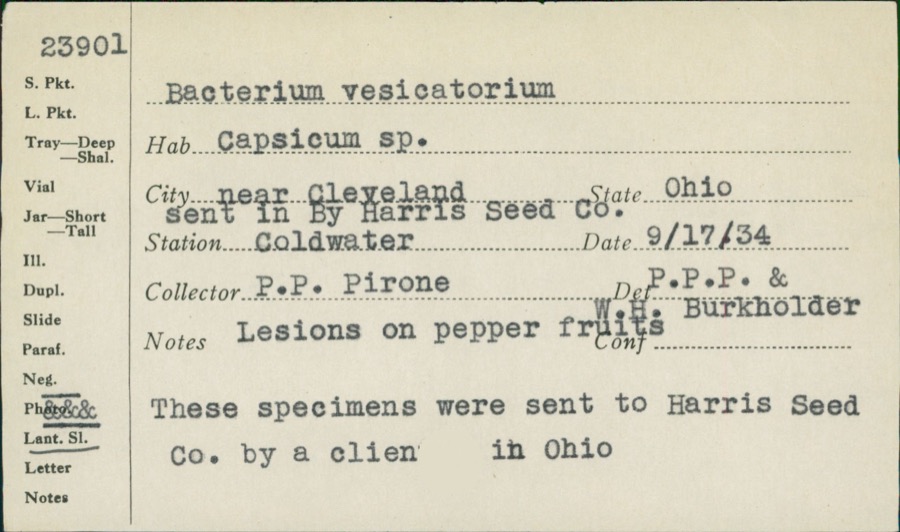
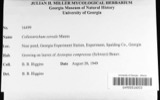
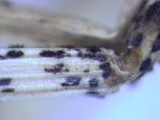
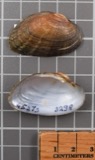
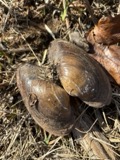
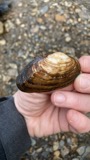
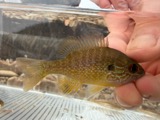
evidence. Museums hold 85 specimens
collected within 10 miles of St. Paul's Catholic Church and Rectory between 1888 and
1959: 60 Animalia, 24 Fungi, 1 Unrecorded. 12 distinct Species records are shown.
Collected by A. D. Selby, Clark, C. (Clarence), Clark, C. F. (Clarence F.) and others. Each is a
physical object with a catalogue
number, and each entry opens the museum's record. This is what was
collected and kept, not a survey of what lives here - nothing can be
concluded from a species being absent.
Regional context, not property-specific
evidence. The National Weather Service names
Sharpsburg, the town this property stands in, in 3 storm reports between 2000 and 2020: 3 thunderstorm wind.
No death or injury is recorded in these reports. Each account below is quoted exactly as the forecast office
filed it, from the NOAA Storm Events Database, and each date
opens the federal record of that event.
No historic map-sheet match is published
for this property yet. That does not mean no map exists. This record needs
a coordinate-quality review before it can be joined to a sheet boundary.
Browse the county's mapped places while that work is
pending.
From the nomination file
1,166 words on record
When this property was proposed for the
National Register, someone wrote the case for it: what the building is,
and why it matters. That document is a federal record in the public domain.
It is reproduced in full on its own page, word for word and never summarised. The text was read off the scanned case file by machine, so the
occasional stray character is the recogniser's and the 1970s
typewriter's.
Quoted from the National Register nomination
for reference 79002827, 7 pages, held by the National Archives in Record
Group 79. See the
catalogue record.
Listed places nearby
6 within 8 miles
Other National Register properties close
enough to walk or drive between, ordered by distance from this one. Both
positions come from the same geocoding pass that matched these properties
to their map sheets.
Listing record. National Park Service National Register of Historic Places, listed-properties dataset, current to 2026-05-22.
Map join. Address geocoded through the United States Census geocoder, then tested against the published boundary of every sheet in the USGS Historical Topographic Map Collection.
How this page is made. Listing fields come from federal records; map-sheet coverage is a labelled coordinate-to-boundary calculation, not a source-field claim.
Specimens. Global Biodiversity Information Facility (GBIF), https://www.gbif.org/. Only records licensed CC0 or CC BY are used. Records licensed CC BY-NC are excluded because this site carries advertising. Images are checked individually and any whose licence is non-commercial, no-derivatives or unreadable is refused.
Storms. NOAA National Centers for Environmental Information, Storm Events Database https://www.ncei.noaa.gov/stormevents/ A work of the United States government, no copyright under 17 U.S.C. 105. Narratives are quoted verbatim from the National Weather Service report and are not edited or summarised.
 Block
Block